March 29th, 2026
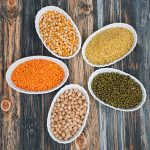 Kitniyot, “the little things”, are excluded from the Ashkenazi diet on Pesach because they are thought to resemble the grains which we call chametz.
In a broader sense, the observance of Pesach and indeed the whole of Judaism requires close attention to the little things.
The Torah devotes many chapters to little things, insisting that it can never be enough to assert broad principles without the detailed bricks that make up the whole edifice.
The Talmud makes this clear when it speaks of carrying out the search for chametz by the light of a candle (Pes. 7b/8a), enabling us to find the littlest pieces of chametz.
On Pesach little pieces can make a difference. On Shabbat little actions can have an effect. In kashrut, small things matter.
In the spiritual and ethical life, little deeds cannot be ignored.
 Posted by oztorah |
  Festivals & Fasts, Pesach |
  Permalink
March 29th, 2026
 One of the puzzles of the Torah is why it took the Children of Israel 40 years to get from Egypt to the Promised Land when the distance was so short and could have been covered in a few days or at worst a few weeks.
Surely God had a special purpose in mind when He planned the journey to freedom.
One explanation is that this was a motley people who had just emerged from bondage. A few days or a few weeks would not have been sufficient to turn them into a disciplined nation able to handle independence and possessed of an esprit de corps.
We all learn that lesson if we imagine that a cultural gap can be closed almost overnight. Taking a short cut is a wonderful idea but it can make matters worse.
The sages speak of paths which are “short but long” and paths which are “long but short”. Things have to take their time.
Posted by oztorah | B'shallach, Festivals & Fasts, Parashah Insights, Pesach | Permalink
March 29th, 2026
 Matzah existed before the Exodus.
Since the Egyptians are said to have pioneered the leavening process in baking bread, unleavened bread must previously have been the norm.
Even when leavened bread became available, it was probably limited to the aristocracy and the wealthy. It was too expensive for the ordinary person, who had to continue eating something like matzah (though the matzah they made was thicker and softer than ours).
This may be why the Haggadah calls matzah lechem oni, the bread of affliction or poor man’s bread “which our forefathers ate in the land of Egypt”.
It is said that by the time of Moses, there were as many as forty types of bread in Egypt, and some or all would have been flavoured and eaten with onions.
When the waters of the Nile were too low, the economy was in jeopardy and people threw bread into the river as an offering, since divinity was attributed to the waters. Maybe this is the origin of the phrase, “Cast your bread upon the waters” (Kohelet 11:1).
Originally bread (as well as matzah) was baked at home. It was only about three centuries ago that professional matzah bakeries began and the matzah became hard and crisp, though some non-Ashkenazic communities still prefer soft matzah.
When the Israelites left Egypt they looked forward to eating rich men’s bread as a mark of freedom, but they were in such a hurry that there was no time for the dough to rise and they had to make do with unleavened bread once again.
Posted by oztorah | Festivals & Fasts, Pesach | Permalink
March 29th, 2026
 “In every generation a person must see himself as if they had come out of Egypt”.
That’s what the Haggadah says. The Pesach story isn’t merely an ancient event involving our ancestors, but a personal experience in which we ourselves took part.
We were there.
We were enslaved in Egypt, we yearned to break free, we followed Moses out of bondage. That’s why the Haggadah praises God who redeemed us as well as our ancestors.
Not only our forebears but we ourselves emerged from serfdom to freedom, from darkness to daylight, from subjugation to selfhood.
This explains why even those who were born long after 1945 are Holocaust survivors who feel the pain and rejoice in the deliverance.
Don’t imagine that anyone is trying to minimise the horrors of the Holocaust years, but it shows that no Jew is ever a latter-day bystander.
If he was not Abraham himself, he lived with Abraham in that generation. He was Moses or Moses’ contemporary.
When someone asks how old I am, I can’t answer in years. I am a Jew, as ancient as history.
If someone asks how long I expect to live, I can’t hazard a guess as to my life expectancy.
I am a Jew, and a Jew lives until history is no more.
If I am Abraham or Moses I could also be the Messiah. It might depend on me as to whether mankind will reach redemption.
Posted by oztorah | Festivals & Fasts, Pesach | Permalink
March 22nd, 2026
Q. Everyone knows that Jews invented sandwiches, but who invented pizza?
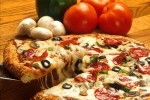 A. The Haggadah seems to suggest that Hillel invented open sandwiches, since he took paschal lamb and bitter herb and placed them on matzah.
According to Chaya Burstein’s Jewish Kids’ Catalog, Roman Jews invented pizza when they put cheese and olive oil on matzah. But whether they then baked it in a pizza oven we do not know.
There are of course many characteristic Jewish foods (both Ashkenazi and Sephardi) but most are merely tasty Jewish adaptations of the cuisine of the environment.
Posted by oztorah | Ask The Rabbi, Festivals & Fasts, Pesach | Permalink


