All that effort to get the house ready for Pesach, and the festival is over in a week!
Dickens’ Uriah Heep, by Frank Reynolds, 1910
Actually, there is a sense in which the observance of Pesach should continue for the whole year.
Avoiding leavened food is done on Pesach in a literal, physical fashion, but refraining from leaven in the sense of puffed-up arrogance is a permanent part of Jewish ethics.
There are two extremes to be avoided – being so arrogant and puffed-up that one is impossible to live with, and being so little concerned with one’s personal worth that one is too self-effacing.
Modesty is a wonderful thing, but not when it turns someone into a nobody. At the same time one’s modesty should not be turned into an art form to such an extent that it’s a type of arrogance. Boasting of one’s modesty is still boasting.
When Dickens creates the character of Uriah Heep, he deliberately makes him the sort of person who keeps on and on saying how ‘umble he is and as a result one gets the impression that Humble Heep is nothing but a show-off.
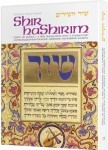
The Shabbat of Pesach is marked by the reading of Shir HaShirim, the Song of Songs. It’s one of the finest pieces of poetry that we possess.
The poem has two main interpretations – literalist (seeing it as a human love story, perhaps a wedding song) and allegorical (showing the love between God and Israel).
Jewish tradition as depicted in the Midrash prefers the allegorical view. It sees the emotional, romantic content of the verses as depicting the spiritual yearning of the people of Israel for God, and God’s yearning for them. Hence when the Book says, “Set me as a seal upon your heart, as a seal upon your arm” (8:6), it symbolises the idea, “I am my Beloved’s and my Beloved is mine” (2:16, 6:3).
The origin of the symbol may be that of sealing or stamping an article with a mark of identity or ownership.
God and Israel are intertwined to the end of time, even though they have moments when they despair of the other’s loyalty and are tempted to repudiate one another. Yet in the end they cannot live without one another and nothing can break the bond of love (8:7).
The splitting of the Red Sea is more prominent in Jewish thinking than other miracles.
Israelites crossing the sea, Venice Haggadah, 1609
The sages even say, “It is as hard for God to make a union between man and woman as it is to split the Red Sea… it is as hard for God to provide human beings with their food as it is to split the Red Sea”.
Nothing is impossible for God: so how can something be hard for Him?
A contemporary author suggests the difficulty “consists in reconciling two contrary demands of compassion”.
The rescue of the Israelites entailed the drowning of the Egyptians, who were also God’s creatures.
(In the seder custom of spilling a drop of wine at the mention of each of the ten plagues; we symbolically weep for the Egyptians’ suffering. Likewise, after the first two days of Pesach we shorten the Hallel, because God is said to have rebuked the angels, “My creatures the Egyptians are perishing, and you want to sing?”)
Making a marriage requires balancing the personalities and sensibilities of husband and wife; feeding one person may mean a second person goes without. This is why some things are difficult for God – not impossible, but not easy either.
His example teaches us to be careful in seeking to balance conflicting claims, needs and opinions.
Q. Why does Judaism place so many restraints on one’s freedom?
Slavery in Egypt, Golden Haggadah Catalonia, early 1300s
A. The Israelites who left Egypt would have disappeared from history if they had not gone to Mount Sinai and received the Torah: they would have had freedom but no idea of what to do with it.
Abba Hillel Silver said, “When is a man free? Not when he is driftwood on the stream of life, free of all cares or worries or ambitions. He is not free at all, only drugged.
“To be free in action, in struggle, in undiverted and purposeful achievement, to move forward towards a worthy objective across a fierce terrain of resistance, to be vital and aglow in the exercise of a great enterprise – that is to be free, and to know the joy and exhilaration of true freedom.
“A man is free only when he has an errand on earth.”
Q. I have a medieval Haggadah which illustrates the Kiddush with scenes of hare-hunting. What has this to do with Pesach?
A. When Pesach begins on Saturday night, we say both Kiddush and Havdalah, but in which order?
In the Talmud (Pes. 102b), the sequence of b’rachot is given as yayin (wine), Kiddush, ner (candle), Havdalah and z’man (time, i.e. festival).
This sequence is summed up as yak-n’-haz. This sounds like the German, jagt-den-Hasen – “hunt the hare”.
As a result, some Haggadot and Machzorim illustrated the relevant page with a hunting scene, even though Jews viewed animal hunting with great ethical disfavour.
Rabbi Dr Raymond Apple zt”l passed away in January 2024. As an archive of the Rabbi’s written contributions across his many fields of interest, this site is a tribute to the man and his work. See the About section for more information on his life. Y’hi zichro baruch.
OzTorah is a weekly email service and website exploring the timeless teachings of Jewish tradition from a contemporary Australian and global perspective. The site includes insights into the parashah, an Ask the Rabbi forum, and articles on various Jewish and interfaith issues.
The content on this site may be distributed and reprinted, as long as acknowledgement is given to Rabbi Raymond Apple and the URL is included intact. https://oztorah.com.

 Posted by oztorah |
  Festivals & Fasts, Pesach |
  Permalink
 The Shabbat of Pesach is marked by the reading of Shir HaShirim, the Song of Songs. It’s one of the finest pieces of poetry that we possess.


