September 15th, 2024
Q. When will I die?
 A. As the prophet Ezekiel would have said, “Lord God, Thou knowest”.
Even when the doctors give an indication of how long a patient has, they cannot be certain. When a person seems to be healthy, anything can lie around the corner. So don’t ask when you are going to die.
In any case, it is probably better that we should not know what lies ahead. Foreknowledge of a happy future could make us complacent; foreknowledge of unhappiness could rob life of meaning and value.
What then can we do?
Take notice of a discussion between Rabbi Eliezer and his pupils.
Rabbi Eliezer said, “Repent one day before your death” (Avot 2:10).
His pupils asked, “But who knows when he will die?”
“Then,” said the sage, “repent today, lest you die tomorrow” (Avot d’Rabbi Natan, chapter 15).
Too many people forget to think about such things. They say, “I will come to synagogue – when I retire… I will give charity – in my will… I will spend time with my family – when the business is less demanding…”.
What a fool’s paradise! If you have a mitzvah to do, do it now. You’ll find the time. The sages say, mitzvah sheba’ah l’yad’cha al tachmitzenna, “Don’t let the mitzvah become stale!” (M’chilta, Parashat Bo).
 Posted by oztorah |
  Ask The Rabbi, Death & Bereavement |
  Permalink
September 15th, 2024
Q. Is football allowed on Shabbat? May I go to a soccer match on Shabbat if I do not pay for or carry a ticket?
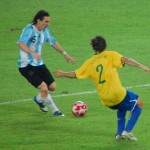 A. Though the Shulchan Aruch (Orach Chayyim 301:2) says, “Young men who derive pleasure from jumping and running are permitted to do so on the Sabbath”, it takes a stricter view (Orach Chayyim 308:45) in relation to ball games: “It is forbidden to play with a ball on Sabbaths or festivals”. The R’ma (Moses Isserles) adds, “Others permit it, and it is customary to be lenient”.
Other authorities reject Isserles’ view, and even one of his close friends, the Rashal (Solomon Luria, quoted by the Magen David) calls Sabbath sport a bad custom which he would have abolished.
Even the R’ma himself qualifies his permission in another note (Orach Chayyim 338:5) and restricts ball games on Shabbat to a hard surface, so that one does not make holes in the ground, and to private property, in order to avoid carrying the ball or anything else from place to place. All this applies to recreational sport. Professional sport is not allowed on Shabbat at all.
Hermann Adler, British Chief Rabbi from 1891-1911, was once asked whether children were allowed to swim on Shabbat. His answer was, “I don’t mind if the children swim, so long as they have davened first!”
You ask about watching a match on Shabbat. The actual act of watching is technically speaking no problem, though there are more Sabbath-like things one could and should be doing. If the match involves one or more Jewish teams, one should definitely stay away and not appear to encourage them to transgress the Shabbat laws. Nor should one bet or gamble on Saturday games.
Posted by oztorah | Ask The Rabbi, Shabbat, Sport | Permalink
September 8th, 2024
 Long life is the reward for three commandments – honouring your parents, sending away the mother bird before taking its young, and having correct weights and measures.
Some might say that the three laws are not really comparable, but the sages constantly warn us against jumping to conclusions as to which laws are more important and which are less.
In any case, theoretically we should not need the promise of reward or the threat of punishment before contemplating a commandment.
The reward or punishment is not an incentive but consequence. It implies, if you keep the commandment, the outcome will be as specified in the Torah.
Is this really provable? If you study the way human history has worked, the proof seems to be there. Look at the three mitzvot:
Honouring your parents? Our destiny largely depends on whether we respect our history (symbolised by our parents) and learn its lessons.
Sending away the mother bird? If we brazenly hurt the feelings of the mother bird we are being cruel, and cruelty of any kind will soon curtail and frustrate the future of our society.
Having correct weights and measures? The stability of a community largely depends on whether we go for balance and justice.
Posted by oztorah | Ki Tetzei, Parashah Insights | Permalink
September 8th, 2024
 A section of this week’s reading (Deut. 24) describes the procedure of divorce.
Of course there was a time when people used to say that divorce hardly ever happened amongst Jews, though the evidence may have to do with social attitudes.
When being divorced was associated with stigma, it may be that many marriages – Jewish and general – limped along in order to avoid the stigma. The liberalisation of the divorce law has made a considerable difference.
People also say that once upon a time there was hardly any divorce amongst orthodox Jews. The evidence is anecdotal, but it could well be that in homes where Jewish law and observance were central to the couple’s way of living they had a greater sense of partnership.
Statistically, there is certainly divorce amongst the orthodox these days, but there probably are no figures correlating divorce to degree of religious observance.
(Personally I made an attempt at compiling such material in my days with the Sydney Beth Din, but the task was too complicated and I had to abandon it.)
If it seems that the numbers of orthodox couples who divorce have risen, it might be that the fluidity of non-orthodox relationships has by-passed most of the orthodox community and it only looks as though the orthodox have more divorces because they generally take for granted that a relationship needs formalisation and if it, God forbid, breaks down, the closure also needs an act of formalisation.
More important, however, than any of the statistics is the significant phenomenon of orthodox synagogues, rabbis and institutions working harder than ever before to prepare couples for marriage and to help them work through any difficulties that might arise.
Posted by oztorah | Ki Tetzei, Parashah Insights | Permalink
September 8th, 2024
Q. Doesn’t it invite antisemitism when Jews call themselves the chosen people?
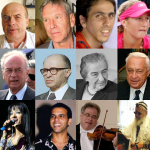 A. Possibly, but we can’t help being ourselves.
Every people has its own sense of self-worth and self-importance. Without it, few would have survived. Indeed, their varied expressions of uniqueness have vastly enriched the world. Ours certainly has.
It is ironical for HG Wells to call the Jewish “chosen people” idea a hindrance to world unity when it is we who were the pioneers of the world-unity concept.
It is an insult to history for George Bernard Shaw – followed by some of the Arab demagogues of our own day – to compare the Jews to the Nazi Herrenvolk boast, when we never claimed to be superior but asserted that the righteous of all peoples have a place in the World to Come.
The Nazis hated us because we were a thorn in their flesh with our insistence on “the rearing of righteousness among the sons of man”, as Isidore Epstein phrased our historic mission.
Having the role of universal moral teachers has brought us persecution, but we remain convinced that we were right. We remain committed to the task and know that thanks to our dream the world will eventually learn how to live with difference without being divided.
We are not without our internal problems, which is why Chief Rabbi Lord Jakobovits said as long ago as 1973 that the first period of modern Israel’s history represents “the generation of Davids, a generation of pioneers cast in an heroic mould, bravely battling against and prevailing over many a Goliath”.
We now we have to develop “a generation of Solomons, blessed in peace to concentrate on rebuilding the sanctuaries of our people, uniting the ingathered tribes of Israel in the pursuit of spiritual excellence and our national vocation as a beacon of social justice, ethical rectitude, moral discipline and religious fervour”.
Posted by oztorah | Antisemitism & Racism, Ask The Rabbi, Defining Jews & Judaism | Permalink
 A. As the prophet Ezekiel would have said, “Lord God, Thou knowest”.


