Why God wished Moses Yasher-Ko’ach – Ki Tissa
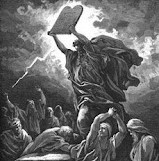 Moses, leaving the people at the foot of Mount Sinai, ascends the summit to commune with God and be instructed in the details that flesh out the Divine law. Forty days and forty nights later, he is ready to resume his task as Israel’s leader and teacher.
But in the meantime the people have sinned. They have driven Aaron to distraction and he has made them a golden calf.
There they are, dancing around it as Moses comes down from Sinai with the tablets of the Decalogue. Seeing their sin, he drops the tablets and they smash to the ground. The event is unparalleled in its drama.
It is hard to understand his action. He knows the law of bal tash’chit – “do not destroy”. Yet he wantonly smashes tablets written by the hand of God! Is it that he simply cannot help himself – the shock has drained him, and he no longer has strength to hold the heavy tablets?
Another possibility is that his action is quite deliberate. He wants to shock the people in order to bring them to their senses. After all, as Abravanel points out, he breaks the tablets not at the top of the mountain when he hears of the sin, but when he reaches the camp and can be seen by the people.
Another view is that he wants to punish them; as Rashi says, people who reject the Torah do not deserve to have it. A similar thought comes from Meir Simcha of Dvinsk who says nothing, except God, is unconditionally holy; the tablets lose their kedushah when the people transgress.
A different point of view suggests it was Moses’ love for the people, not his anger, that causes his action. Says the Midrash: Moses himself commits a sin in breaking the tablets. but his thought is, “God, they have sinned; I too have sinned; forgive both of us, or neither!”
Similarly, says another Midrash, by destroying the tablets Moses has as it were, torn up the contract that binds them to God. Now there is nothing in black and white that specifies their duties, and they thus have to be judged as inadvertent and not deliberate sinners.
In a famous phrase, the sages suggests that God congratulates Moses on his action and save Yeyasher ko’ach sheshibarta – “Well done that you broke the tablets!”
This tells us that Moses’ action was not really involuntary but deliberate, but he risks personal punishment. However. what he did was for God’s own sake, and God assured him of forgiveness.
Later in the forty years in the wilderness, Pinchas also acts decisively against idolatry and needs to be assured that God understands. There are times when being Mister Nice Guy is no longer possible, when one can no longer tolerate the intolerable.
Biblical teaching on war reminds us to try peaceful means first, but as a last resort it may be necessary, to use Shakespeare’s words, to take arms against a sea of troubles. This is not to say that Judaism encourages or celebrates violence, but there are times when, like Moses and like Pinchas, moral conscience says you can no longer remain silent: “It is a time to act for the Lord!”.


