Hopes & fears – the Scripture readings of Rosh HaShanah
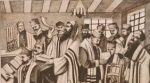 Rosh HaShanah amazes me. It has been a highlight of the Jewish calendar from the time of Moses. Its main features, the sounding of the shofar… the liturgy that acknowledges God as king, judge and redeemer… the majestic words and uplifting thoughts – all have been part of Judaism from ancient days.
Yet every year when I encounter the Rosh HaShanah experience again, it speaks to me with a freshness and challenge that is truly incredible.
Take the Torah readings for the two days, and the two Haftarot. All deal with human yearnings, hopes and fears. All tell ancient stories, but it could be my yearnings, my hopes and my fears that are being described. Let me pin-point their main features.
On the first day the Torah reading is the story of the birth of Isaac, after so many years in which Abraham and Sarah yearned for a child. The Haftarah tells a similar story, of Hannah’s prayer for a child being answered by the birth of Samuel.
On the second day the Torah portion describes Abraham’s anguish at the Akedah, the binding of Isaac; the Haftarah tells of Rachel’s tears when her children go into exile.
One is awash with thoughts evoked by the four stories. For example –
1. The age-old Jewish concern for continuity… Abraham and Sarah, Hannah, Rachel, and Jews in every generation were apprehensive that the tradition might end with them unless there was a future generation to maintain the heritage.
2. The confidence that God will help… When almost consumed by worry, none of the Biblical figures give way to pessimism and think there is no way out. They – like we – understand that if we play our part, God will match us and play His.
3. The innate piety of Jewish women, even greater than that of the men… All the Rosh HaShanah readings deal with prayers uttered by women. Judaism recognises that men need more rituals than women in order to cultivate a religious feeling; women, on the other hand, have a more natural spiritual sensitivity.
4. The fulfilment of dreams does not come easily… Ben Gurion said that hard as it is to create a State, it is even harder to maintain one; the Rosh HaShanah readings show that sometimes you are in danger of losing what is most precious to you – for in one chapter, Isaac is given and in the next he is almost taken away; and the Haftarot show – especially on the second day – a mother weeping at the possibility that her children may be lost to her. What you have you must cherish and guard with fierce determination, but if you have to let go, you must do so with dignity.


